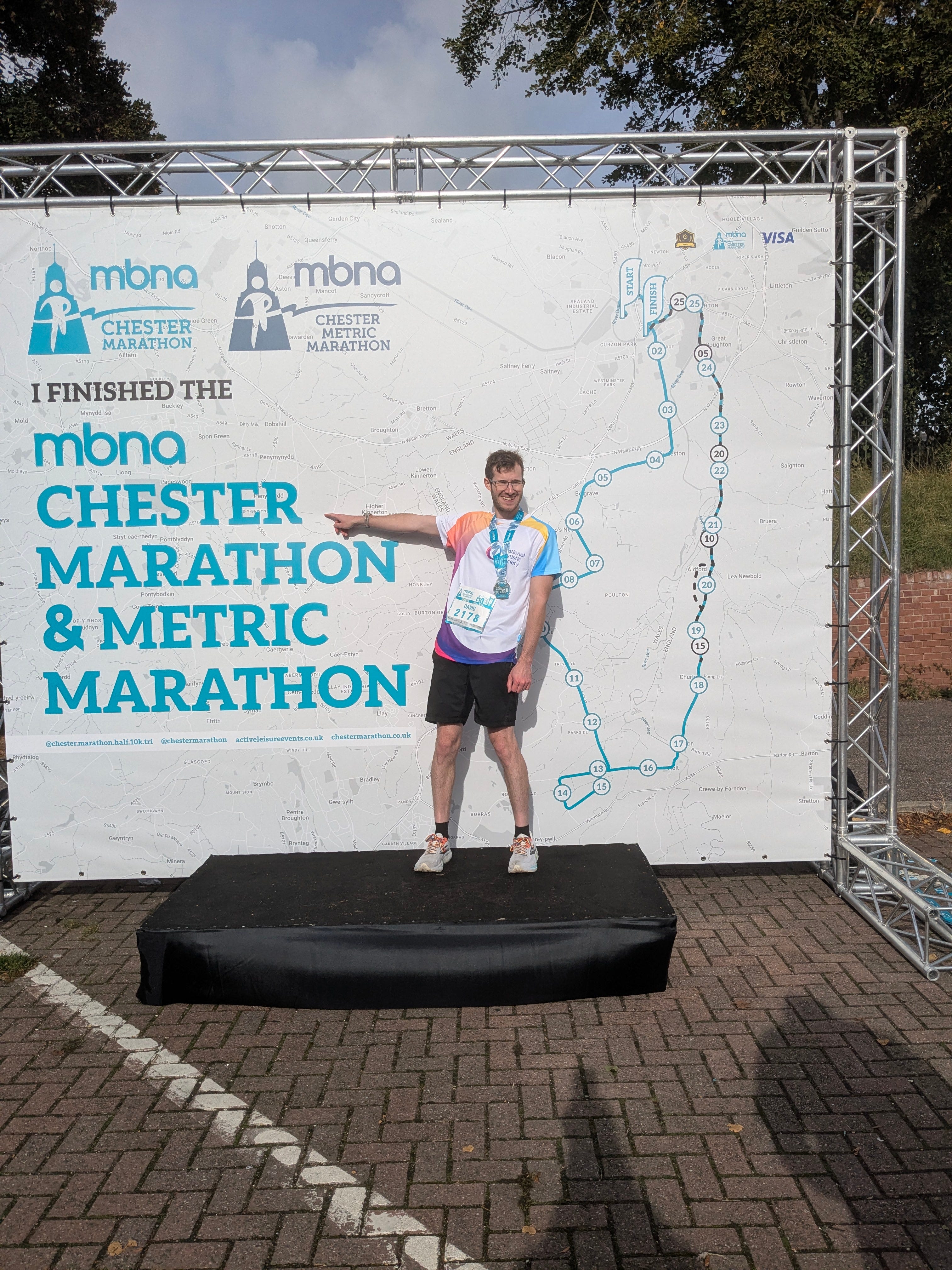
The first marathon
And what I would do differently next time

“When are you going to run a marathon, Dave,” they ask. “Maybe next year,” I respond, before changing the subject back to more familiar territory.
I completely avoided the idea of running a marathon, instead preferring to master the art of running a half marathon. That was until I won a competition to, err, run the Chester Marathon…
5 hours and 55 minutes later, on an October morning, I did just that. Sounds easy, right?
The training miles
One of the benefits of running an Autumn marathon is that the training phase takes place during the Summer which, if you’re up early like me, is a real advantage. During August and September, I completed six long training runs with varying degrees of difficulty.
The first run took place at Draycote Water, a beautiful picturesque reservoir in Warwickshire, followed shortly afterwards by the equally stunning Isle of Man. Early in the process, I decided that I wanted every long run to feel different. I didn’t want to run round the same block ten times over, but instead wanted to make the runs memorable.
Both Draycote and the Isle of Man were undulating, both in countryside settings, allowing me to get away from the hustle and bustle. Things started well with Draycote: 11 miles in the bag with no stopping across the two hours. Nine days later, the Isle of Man proved more of a struggle towards the end. Nevertheless, I completed the 13.1 miles in 2 and a half hours, putting me on track for a five hour marathon time.
Post Isle of Man, it was time to venture into the unknown. I’d never ran beyond a half marathon, and this was always a bit of a mental barrier for me. Would my body hold up? Would I ache more than usual? Would I puke up? (okay, maybe not the last one!) I split the long run into three, with Bedworth parkrun serving as the filling in the sandwich. Running from mine to Bedworth, doing the parkrun, and then running back to mine, consisted of me running 14 miles in 2 hours and 49 minutes.
One week later, rinse and repeat, this time with the Longford Striders social run in the middle: 16 miles ticked off in 3 hours and 21 minutes. So far, things were going well. The body was feeling good, I was feeling good, and I felt like I was in good form to tackle the marathon head on.
What not to do during training
On September 7th, I ran 18 miles in 3 hours and 43 minutes, and it’s fair to say that my body pretty much crumbled towards the end. It was at this point, after a couple of conversations, that I realised I was running my long runs wrong. Sounds odd? It did to me when I first thought about it.
But the crux of my problem was that I was preparing for a marathon, except I wasn’t running as if it was the marathon. There was little to no strategy. Do I run-walk the marathon, otherwise known as Jeffing? When do I take my drink breaks? I had begun to think about this on and off, but hadn’t consciously thought about it. And while the long runs that incorporated parkrun were good, I was never going to stand still for 15 minutes during the marathon, so that run was never really a valid gauge of how my body was going to perform on the day (yes, I realise I am being hyper critical here).
I also was spending too long on my feet during these final runs, increasing the risk of injury. For my final training run, I ran 15.4 miles in 3 hours, incorporating a run/walk strategy, with 25 minutes running and 5 minutes of walking. Towards the end, it was a struggle, but nothing I had not seen earlier. At least now, I was running with the marathon mindset.
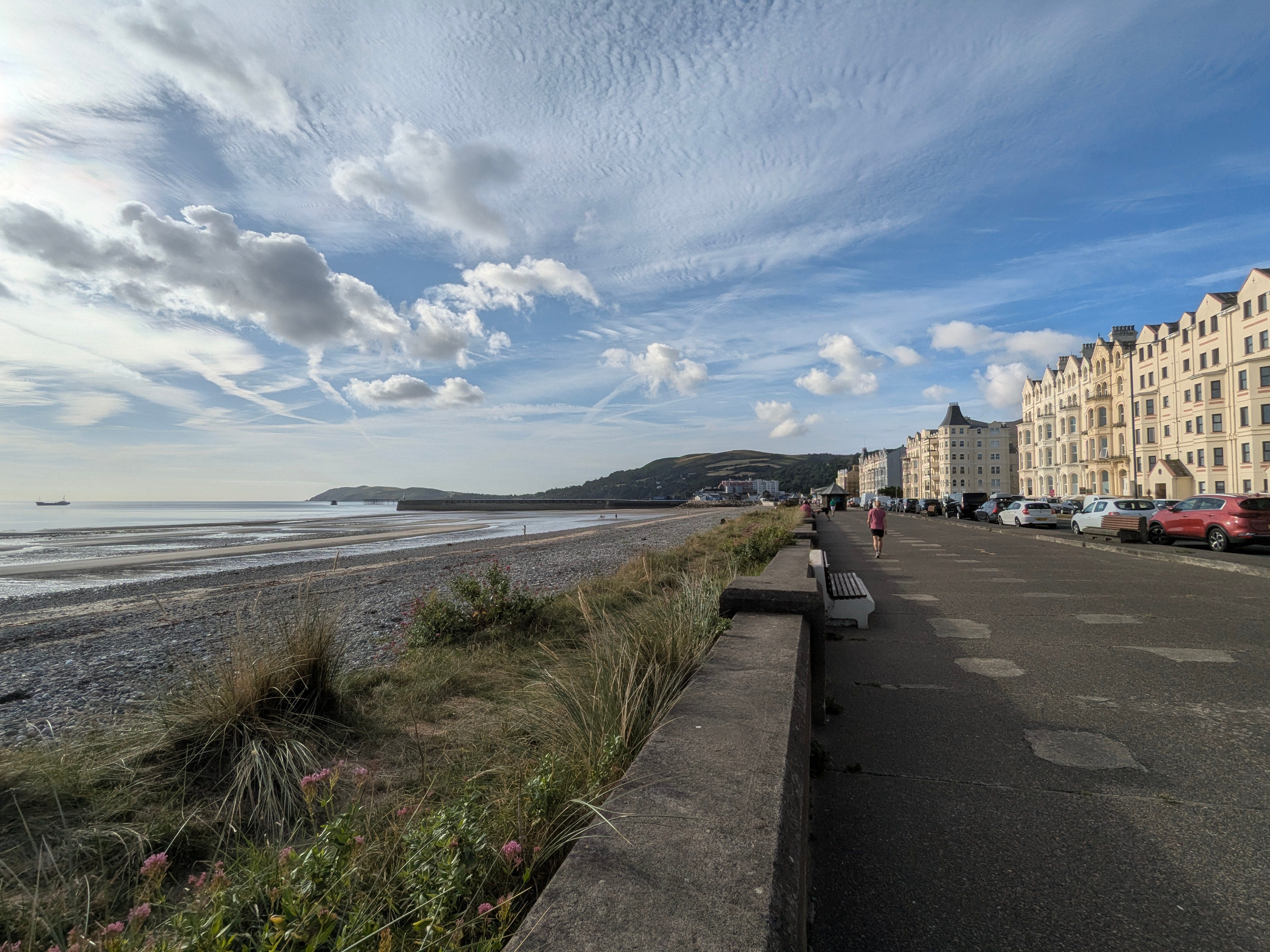
Overall, I enjoyed the training cycle. Mentally I felt a lot better post run than what I did beforehand, aided by good weather of course.
The race
Preparation up until marathon week had gone well. Unfortunately, things were thrown into perspective four days before the marathon with the passing of my Nan. Suddenly, the marathon took on new meaning, and there was only one aim: “Finish the marathon, for Nan.”
Weirdly I went into the race not feeling nervous. The wait until the start felt long but I didn’t feel sick or nauseous at any point in the run up. There was a weird sense of excitement that I can’t explain.
The marathon started in Chester racecourse at 09:00 in cool and dry conditions. The start and the first few miles went according to plan, and I stuck with the 25:5 jeffing strategy that I ran with a couple of weeks earlier. However, it soon became apparent that this was going to be far difficult than I thought. From about mile 10, the body began to break down, earlier than on all the training runs I had completed.
As we got past half way and my pace slowed further, worry turned to anxiety as I became concerned that I was going to mopped up by the tail bike (the race had an official 6 hour cut off). By mile 15, I had hit what’s known as the marathon ‘wall’, and the body had simply had enough. Although the Chester Marathon is relatively speaking flat, there are a few undulating hills, and these should be treated with caution irrespective of where on the course they fall.
For me, a second wind did follow, aided by some downhill sections on the way back into Chester. But again, the struggles continued. I wasn’t prepared to struggle to walk in a straight line during the final 5k, my left leg wanted to wander in any direction but straight ahead! I had to stop on multiple occasions, take the shoes off, give my feet a bit of a shake and hope for the best. The final 5k is easily the worst I have ever felt running by a long stretch. Pure agony.
Even music, my usual saviour, had failed me when I realised that Spotify had drained my phone battery by the time we got to half way! Terrible news both for me, and those around me, who enjoyed listening to bands such as My Chemical Romance and Queen…
At 15:10, I entered the finishing straight. Finally, the line was in sight. As I approached the line, I felt emotional, knowing what I had completed, and in very difficult circumstances, both physically and mentally. The feeling when I crossed the line though was one of relief. I didn’t give up, I did keep pushing, and I did complete the marathon in 5 hours and 55 minutes! A few people after the line were shocked that I finished, given how wobbly my legs looked.
Post race
No one can take away the medal or the t-shirt. That’s it, you’ve completed a marathon! Yes, that happened.
The day after, legs aside, I felt good. I did have aches and pains in the first week, but they subsided, and I got myself back to the gym and back on running. This proved to be a major error: the aches and pains returned worse than before. I had pushed myself too hard, too soon instead of allowing my body to recover.
I’ve since learnt from blood tests that my vitamin B12 is on the low end of normal, and very low from an athletic perspective. As someone who is active, this isn’t ideal. The lack of B12 is also explained by the fact that my diet is largely plant-based and doesn’t contain much meat.
I’m still keeping moving, but at the same time taking care of my body and trying to take things easier than what I was a few weeks ago.
Reflecting on the process
I’ve not talked much about energy gels and general nutrition so far, and that’s because (B12 aside), it generally went okay, and I didn’t feel utterly floored in the immediacy of the post marathon.
Likewise, I was happy with the pacing for the first stretch of the marathon. I don’t feel I went off the line too fast, nor do I feel the training runs were too fast. For me it was just right. I kept in touch and chatted with a few runners around me which helped keep me going. I enjoyed Jeffing the first half of the marathon, and were I to do the marathon again, I think I would be tempted to do a 4:1 run/walk split.
The messages of support from back home were incredible. I realise the marathon is all I’ve banged on about for the past few months but to those who messaged me during the race willing me on, I cannot thank you enough. Running a marathon can feel incredibly lonely, so having that uplift was necessary and very welcome.
I didn’t go into marathon training with enough of a plan. While “I’m going to run 14 miles today” was a plan for an individual run, it wasn’t enough because it didn’t account for whether my legs felt great or heavy. There was no back-out in the event of failure in training (anyone who knows me knows that if I say I’m going to do something, it’s going to happen). A better plan would have been to say “I’m going to complete 3 hours ‘on my feet’ today, with 8 minute run intervals and 2 minute walk intervals.” That way, you’re giving yourself flexibility to adjust your pace.
I will be honest, it doesn’t matter whether you do 1, 10 or 100 training runs. Nothing will prepare you for the marathon run itself. Looking back, six weeks on, I have zero regrets. Most importantly, complete it with your head held high, because you’re now a marathon runner!
Thanks to everyone who donated to my fundraiser during training for the National Autistic Society, during which we raised £575.